
Recently Searched Australian VIN Numbers
These VINs were decoded by visitors of Australia.VINDetails.info. Click any VIN to view its full history.
Free Vehicle Identification Number (VIN) Decoder for Australia
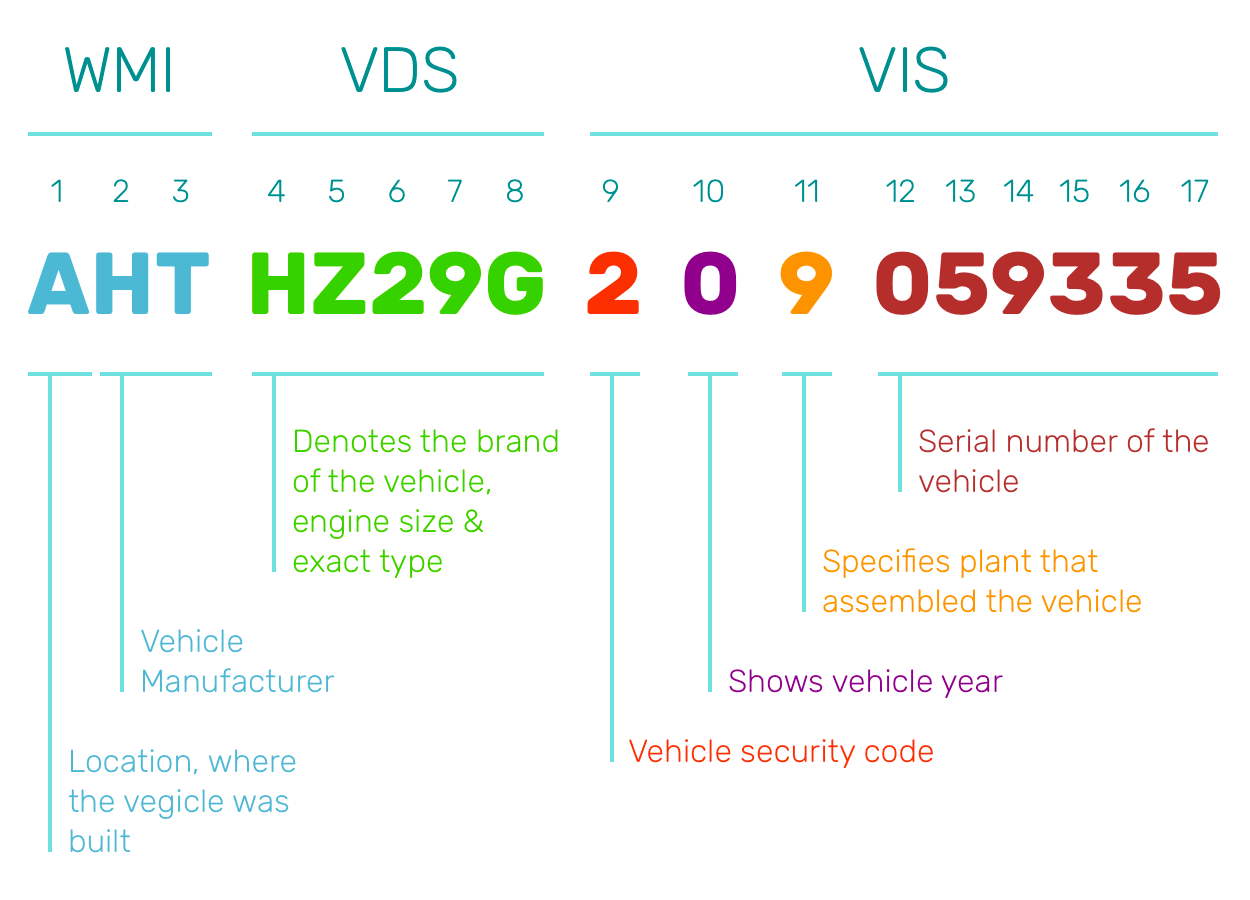
The diagram shows how a modern 17-character VIN is built. Vehicles manufactured before 1981 in Australia may have fewer characters (pre-ADR compliance).
| Position 1 | 1 | Country of build – 6 = Australia, 1 = USA, J = Japan |
| Positions 2–3 | FT | Manufacturer code (e.g. Toyota, Holden, Ford, Mazda) |
| Positions 4–8 | GHDLZ | Vehicle attributes – model, body, engine |
| Position 9 | B | Check digit – validates the VIN |
| Position 10 | G | Model year (see table below) |
| Position 11 | K | Assembly plant |
| Positions 12–17 | 456923 | Sequential production serial number |
Every vehicle sold new in Australia must carry an ADR (Australian Design Rules) compliance plate showing the VIN and approval number. Our free decoder reads this VIN and returns the manufacturer, plant, model year, engine family and export region — useful for private buyers, dealers, insurers, and mechanics.





World Manufacturer Identifier Decoder
Choose a country to decode a VIN using our region-specific decoder, tailored to that country's registration and compliance system.

VIN Decoder in United States
Decode US-market vehicle VIN numbers and get OEM, plant and year details.


VIN Decoder in Australia
Full Australian VIN decoder – cars, utes, bikes, trucks, buses and caravans.






Vehicle Identification Number (VIN) Australia
A VIN (Vehicle Identification Number) is a unique 17-character code that identifies every car, bike, truck or bus. In Australia, the VIN is stamped on the compliance plate and on the chassis itself.
- All
- Bike
- Car
- Truck





The Complete Australian VIN Decoder Guide
Everything you need to know about reading, decoding and verifying an Australian Vehicle Identification Number — for cars, motorcycles, trucks, buses, utes, caravans and imported vehicles.
1. What Is a VIN and Why It Matters in Australia
A Vehicle Identification Number (VIN) is a 17-character alphanumeric code that is assigned to every motor vehicle at the point of manufacture. In Australia, the VIN is the single most important identifier for a vehicle — it's used by state and territory registration authorities (Transport for NSW, VicRoads, Queensland Transport and Main Roads, Main Roads WA, Service SA, Service Tasmania, Access Canberra, and the NT MVR), by insurers, by police, and by the PPSR (Personal Property Securities Register).
Since 1989, all vehicles sold new in Australia have been required to display a VIN that conforms to the international ISO 3779 standard. Before 1989, vehicles were identified only by a chassis number, engine number and ADR compliance plate — which is why classic Australian-built Holdens, Fords and Valiants sometimes have shorter identifiers. Our free Australian VIN decoder handles both modern 17-character VINs and older pre-1989 chassis numbers.
2. Anatomy of a 17-Character VIN — Broken Down for Australian Buyers
Understanding what each of the 17 characters means helps you sanity-check any vehicle before you buy. Here is the position-by-position breakdown using a typical Australian-delivered Toyota Hilux VIN as an example:
| Position | Meaning | Typical Value |
|---|---|---|
| 1 | Country of manufacture (WMI) | 6 = Australia, J = Japan, 1 = USA, W = Germany, K = Korea, M = India, 9 = Brazil |
| 2–3 | Manufacturer identifier | Toyota = T, Holden = H, Ford = F, Mazda = M, Nissan = N |
| 4–8 | Vehicle attributes – model, body style, engine, restraint | Determined by the manufacturer |
| 9 | Check digit (used to validate the VIN) | 0–9 or X |
| 10 | Model year | See the year code table below |
| 11 | Assembly plant code | Unique to each plant worldwide |
| 12–17 | Sequential production number | Unique to that vehicle |
Model Year Codes (Position 10)
The 10th character tells you the model year the manufacturer designated — important because the model year can differ from the year the vehicle was first registered in Australia.
| Code | Year | Code | Year |
|---|---|---|---|
| L | 1990 / 2020 | Y | 2000 / 2030 |
| M | 1991 / 2021 | 1 | 2001 / 2031 |
| N | 1992 / 2022 | 2 | 2002 |
| P | 1993 / 2023 | 3 | 2003 |
| R | 1994 / 2024 | 4 | 2004 |
| S | 1995 / 2025 | 5 | 2005 |
| T | 1996 / 2026 | 6 | 2006 |
| V | 1997 / 2027 | 7 | 2007 |
| W | 1998 / 2028 | 8 | 2008 |
| X | 1999 / 2029 | 9 | 2009 |
3. Where to Find the VIN on Australian Vehicles
Depending on the type of vehicle, the VIN can be found in one or more of the following locations. On modern vehicles, the same VIN must appear in at least two places — usually a visible one and a hidden (secondary) one.
Cars, SUVs and Utes
- Bottom of the windscreen (driver's side): The most common location — a small metal or plastic plate visible through the glass.
- Driver's door jamb / B-pillar sticker: Contains the VIN along with tyre pressures and build month/year.
- Firewall or chassis rail: Stamped directly into the metal — this is the "true" VIN used by police to detect rebirthing.
- Compliance plate (under the bonnet): ADR compliance plate with VIN, approval number, category and seat capacity.
- Registration papers and insurance documents: Always cross-check the VIN on the paperwork against the physical plate.
Motorcycles and Scooters
- Steering head tube (the frame near the handlebars).
- Engine casing (engine number — separate from VIN but usually listed on rego).
- Compliance plate riveted to the frame (for ADR-approved road bikes).
Trucks, Buses and Heavy Vehicles
- Chassis rail near the front axle (stamped).
- Cab door jamb plate (for cab-chassis trucks).
- Body builder's plate (for buses and specialised bodies — shows the body VIN and the base chassis VIN).
- NHVR (National Heavy Vehicle Regulator) records for heavy vehicles over 4.5 tonnes GVM.
4. Car, Bike, Truck and Bus — Why Decoding Differs
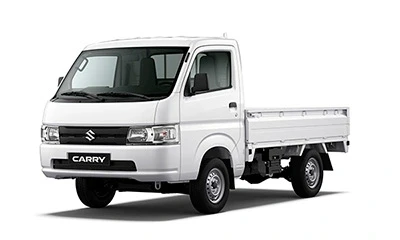
Australian vehicle categories have very different VIN structures because they're regulated under different ADR categories. Our decoder handles all four:
Cars & SUVs (ADR Category MA/MB/MC)
Passenger cars sold new in Australia must have a 17-character VIN. Popular brands like Toyota, Mazda, Hyundai, Kia, Ford, Mitsubishi, Subaru, Nissan, Volkswagen, BMW and Mercedes-Benz all use ISO 3779 format. Decoding returns the exact plant (e.g. Toyota's Altona plant in Victoria or Mazda's Hiroshima plant in Japan), model year, engine family (e.g. 2.8L 1GD-FTV diesel), and ADR category.
Motorcycles & Scooters (ADR Category LA/LB/LC/LD)
Motorcycle VINs follow the same 17-character standard but often include model-specific codes for engine displacement, brake type and LAMS (Learner Approved Motorcycle Scheme) compliance. Popular Australian brands like Honda, Yamaha, Kawasaki, Suzuki, KTM, Harley-Davidson and Royal Enfield all use standard VINs.
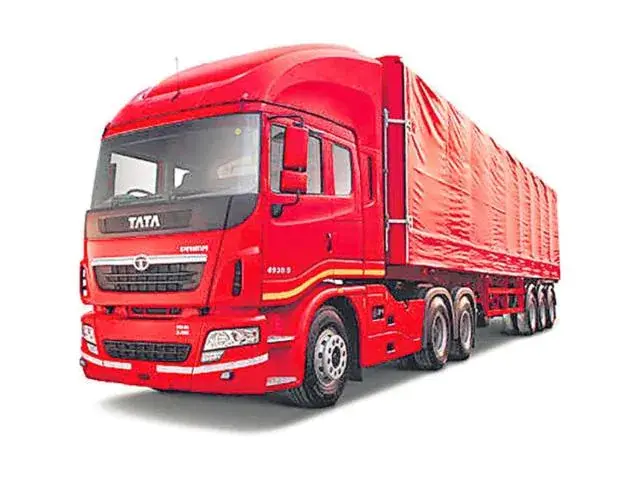
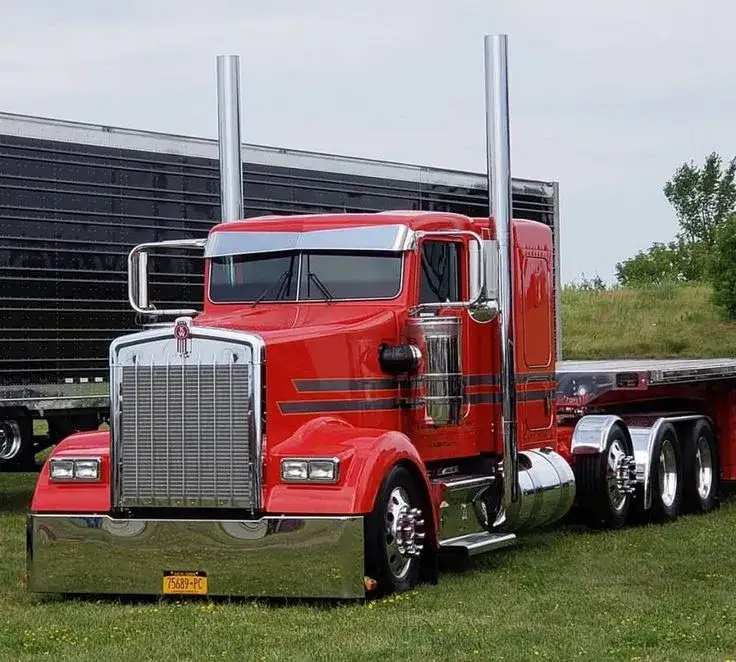
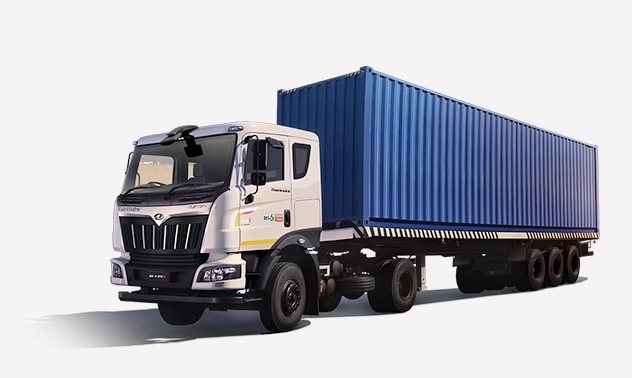
Trucks & Prime Movers (ADR Category NB/NC)
Heavy vehicles often have two identifiers: a chassis VIN and a body VIN. Major Australian truck brands — Kenworth, Volvo, Scania, Isuzu, Hino, Fuso, Mack, Freightliner and Iveco — all use standard VINs. When decoding a truck, we return the GVM/GCM, axle configuration, engine family and — for locally-built Kenworths — the Bayswater (VIC) plant code.
Buses & Coaches (ADR Category MD/ME)
Buses in Australia are often built on imported chassis (Volvo, Scania, Mercedes-Benz, MAN) with a locally-fitted body (Volgren, Bustech, Custom Coaches, BusTech). The VIN decodes the chassis, while the body has its own secondary identification plate. Our decoder returns chassis details, engine family and the base manufacturer's country.
5. Australian State & Territory Registration Systems
Each Australian state and territory maintains its own registration database. When you decode a VIN on our site, you can then cross-check the results with the appropriate authority:
NSW
Transport for NSW — check registration, CTP insurance and vehicle history.
VIC
VicRoads — registration, roadworthy certificate (RWC) and written-off vehicle register.
QLD
Queensland TMR — rego, safety certificate and WOVR (written-off vehicle register).
WA
Main Roads WA — rego, vehicle examiner certificate and licence checks.
SA
Service SA — registration, defect notices and WOVR entries.
TAS
Service Tasmania — rego, inspection and heavy vehicle permits.
ACT
Access Canberra — rego, roadworthy and vehicle standards.
NT
NT MVR — registration, inspections and heavy vehicle accreditation.
The Written-Off Vehicle Register (WOVR) is a national database shared between states. If a vehicle has been written off and re-registered in a different state, the WOVR should flag it — but always run your own VIN check to be sure.
6. VIN Decoding for Used Car Buyers in Australia
Buying a used car privately in Australia is normal — but it's also where most vehicle fraud occurs. A proper VIN check protects you against:
- Rebirthed vehicles: Stolen vehicles re-identified with a VIN from a wrecked but legitimately registered car.
- Odometer tampering: Illegal in every Australian state under fair trading laws.
- Undisclosed write-offs: A repairable write-off may not always be obviously damaged.
- Outstanding finance: Check the PPSR — if a bank has a security interest, the car can be repossessed from you.
- Stolen vehicles: Police-maintained national stolen vehicle database.
7. Imported Vehicles and Grey Imports
Australia is one of the world's biggest markets for imported vehicles, especially JDM (Japanese Domestic Market) sports cars like the Nissan Skyline, Toyota Supra, Mazda RX-7 and Subaru WRX. Imported vehicles must meet SEVS (Specialist and Enthusiast Vehicle Scheme) or the 25-year rule to be complied for Australian roads.
When decoding an imported vehicle, the VIN will show the country of origin (J for Japan, W for Germany, 1 or 4 for USA) and the original manufacturer. The Australian compliance plate is fitted by an RAWS (Registered Automotive Workshop Scheme) workshop — you should see two identifiers: the original VIN and the Australian compliance number.
8. VIN Decoding for Insurance and Finance
Australian insurers — NRMA, RACV, RACQ, RACWA, AAMI, Allianz, Suncorp, Budget Direct, Youi — all use the VIN to confirm the make, model, variant and year of the vehicle you're insuring. If the VIN on your insurance policy doesn't match the vehicle you actually own, your claim can be denied. Finance companies and novated lease providers also use the VIN to register a security interest on the PPSR.
9. Australian Vehicle Recalls and VIN Lookup
The ACCC (Australian Competition and Consumer Commission) maintains the Product Safety Australia recall database. Manufacturers — Toyota, Mazda, Ford, Holden, Nissan, Mitsubishi, Honda, Subaru, BMW, Mercedes-Benz, Volkswagen and more — post Australian-specific recalls there (Takata airbags, fuel pumps, brake boosters, wiring harnesses). When you decode a VIN with us, you can then cross-check the result against the ACCC recall list to see if your vehicle is affected and whether the recall work has been done.
10. Decoding the ADR Compliance Plate
Every new vehicle sold in Australia since 1989 carries an ADR compliance plate. This small metal plate contains:
- VIN: 17-character identifier (matches chassis stamp)
- Approval number: e.g. 12345 — identifies the approved model
- Category: MA, MB, MC, MD, ME, NA, NB, NC, LA, LB, LC, LD, LE, TA, TB, TC, etc.
- Seating capacity: Critical for buses and people movers
- Date of manufacture: Month and year
- GVM (Gross Vehicle Mass): Maximum loaded weight for trucks and heavy vehicles
11. How Our Free Australian VIN Decoder Works
Step 1: Enter your 17-character VIN (or older pre-1989 chassis number) into the box at the top of this page. Step 2: Complete the invisible reCAPTCHA — you won't even notice it. Step 3: Click "VIN Decoder". The system sends your VIN to the global VIN registry and returns:
- Manufacturer name and country of origin
- WMI (World Manufacturer Identifier) and VDS (Vehicle Descriptor Section)
- Model year and manufacturer date
- Assembly plant
- Engine family and body classification
- Regional specification (AU / EU / US / JDM)
- Compliance and safety data where available
All decoding is done server-side using an SSL-encrypted connection.
12. Common Questions About Australian VINs
Can I decode a motorcycle VIN for free?
Yes — our decoder handles motorcycles and scooters from Honda, Yamaha, Suzuki, Kawasaki, KTM, Harley-Davidson and Royal Enfield the same way it handles cars. The VIN's 10th character shows the model year, position 1 shows the country, and positions 4–8 encode the displacement and model family.
Does the VIN tell me the exact build date?
The VIN gives you the model year (position 10). For the exact day of manufacture you need the compliance plate, which shows month and year. Dealers can request the exact build sheet from the manufacturer using the VIN plus the dealer code.
Is it illegal to check a VIN in Australia?
No — checking a VIN is completely legal and encouraged. In fact, service providers like PPSR, state rego checkers and our VIN decoder are designed to protect buyers. What is illegal is tampering with a VIN, which is a criminal offence under every Australian state's vehicle registration laws.
What if the VIN has 11 or 16 characters?
Pre-1989 vehicles often have shorter identifiers. Enter whatever chassis number you have — our decoder will still return whatever data is in the global registry. If the decoder returns nothing, you may need the manufacturer's build sheet for older vehicles.
13. Why Use Australia.VINDetails.info?
- 100% Free: No signup, no credit card, no hidden fees.
- Australia-focussed: Meta, content and schema are all tuned for Australian search intent.
- Multi-vehicle support: Cars, bikes, trucks, buses, utes and caravans.
- Instant results: Server-side decoding in under 2 seconds.
- Compliance-aware: We explain the ADR compliance plate and state rego context.
- Mobile-friendly: Works on any phone, tablet or desktop.
- Secure: All traffic served over HTTPS with invisible reCAPTCHA.
Frequently Asked Questions
Answers to the most common questions about Australian VIN decoding.
- What is a VIN?
A VIN, or Vehicle Identification Number, is a unique 17-character code assigned to every motor vehicle when it's manufactured. It identifies the manufacturer, model year, plant and serial number of a vehicle, and is used for registration, recalls, insurance and vehicle history.
- How do I check a VIN in Australia?
Enter the 17-character VIN into our decoder above, complete the invisible reCAPTCHA, and click "VIN Decoder". You'll instantly see manufacturer, plant, model year, engine family and country of origin. For a full history report, cross-check the VIN with PPSR and your state's registration authority.
- Is this VIN decoder free?
Yes — completely free. No signup, no credit card. You can decode as many VINs as you like.
- Can I decode a bike, truck or bus VIN?
Yes — our decoder supports cars, motorcycles, trucks, buses, utes and caravans. As long as the vehicle has a standard ISO 3779 VIN or a pre-1989 chassis number, we can decode it.
- Does a VIN check show if a car was written off?
Our decoder shows manufacturer and build details. To see if a car has been written off in Australia, you must also check the WOVR via your state's registration authority (VicRoads, TfNSW, QLD TMR, etc.) or run a PPSR search.
- Where is the VIN located on my car?
Look at the bottom of the windscreen on the driver's side, on the driver's door jamb sticker, on the ADR compliance plate under the bonnet, and stamped into the firewall or chassis rail.